When a Haulage Agreement Doesn't Satisfy the Warranty


WHAT THIS CASE ESTABLISHES
A fifth-wheel coupling that fails under pothole impact produces accidental external causation, and neither the driver's account nor the Police Report implicates an excluded peril.
A Police Report is reliable evidence that an accident occurred but is not authoritative on every particular; where it conflicts with a driving licence and an employer's confirmation on driver identity, the documentary record prevails.
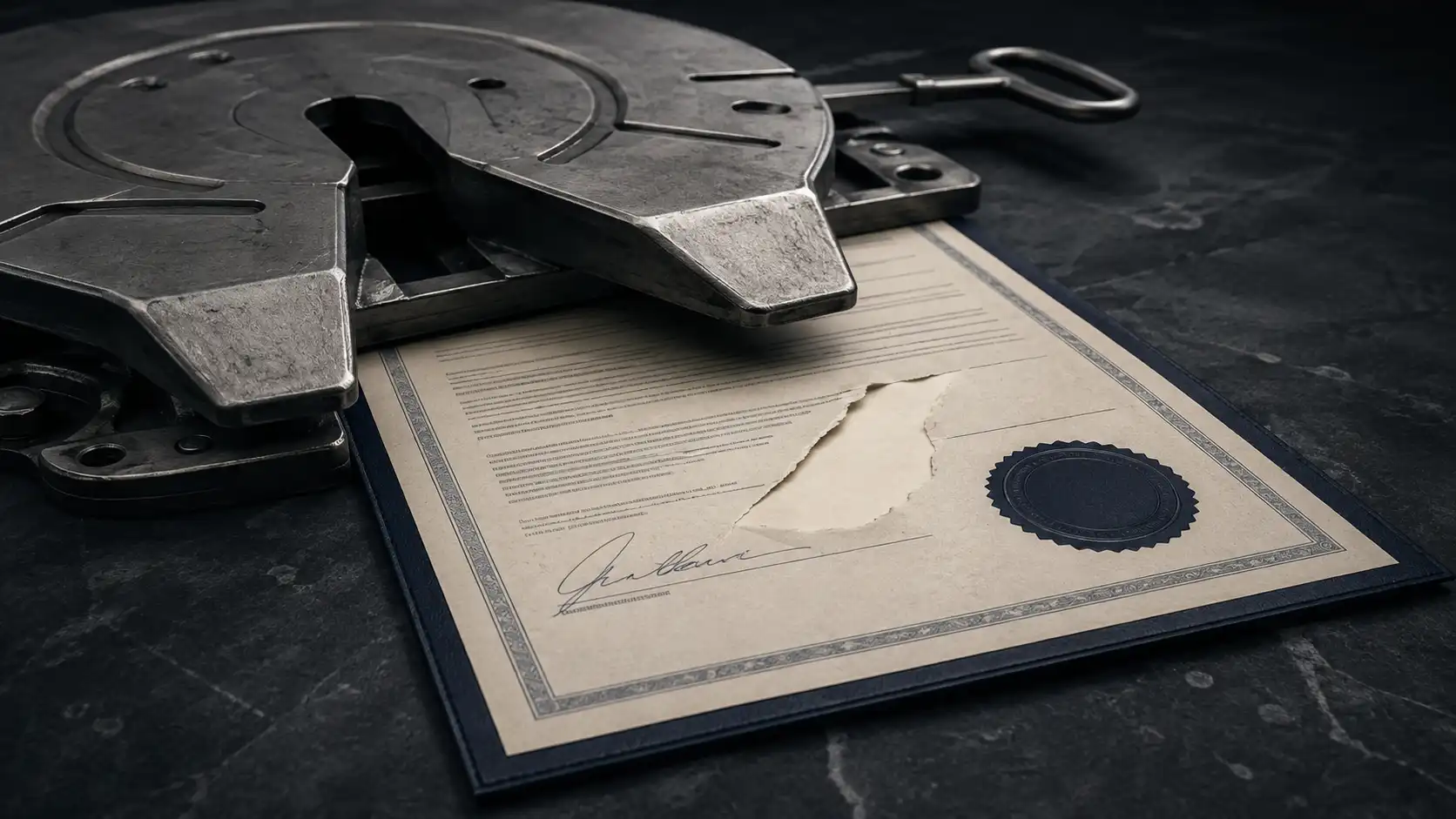
A warranty requiring assignment of responsibility to the carrier is satisfied by what the agreement transfers, not by the fact that an agreement exists; a contract limiting the carrier to its own negligence leaves the warranty partially breached.
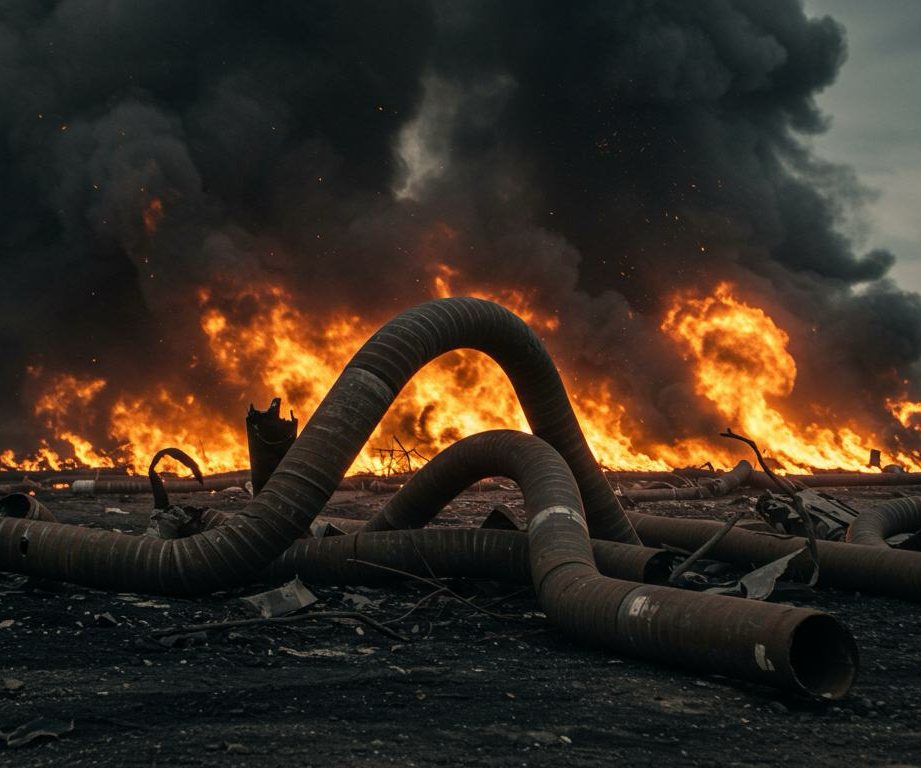
A tanker truck carrying Automotive Gas Oil left a loading terminal in Lagos bound for a fuel station in Cross River State. Two days into the journey, on the express way linking Warri and Benin in Delta State, the truck head separated from its trailer. The tanker overturned, and part of its cargo spilled onto the road. No life was lost, and the recovered fuel was transferred to another vehicle within hours. On paper, this was a straightforward Goods-in-Transit loss: a verifiable accident, a measurable shortfall, and a claim supported by a waybill, a debit note, and a police report.
It did not settle as a straightforward loss. When New Trend Loss Adjusters Ltd (NTLOSS) examined the paperwork behind the hired tanker, a written Haulage Agreement existed, the driver was properly licensed, and the vehicle carried valid roadworthiness documents. Yet the agreement, read closely, did not do what the policy's Owned & Hired Vehicles Warranty required of it, and that gap reduced the sum recommended for settlement by close to a quarter of the amount otherwise verified as payable.
The lesson for claims managers and underwriters is that a signed haulage contract is not, by itself, evidence of warranty compliance; its substance has to be checked clause by clause.
The Cargo Moved on a Hired Truck, Not an Owned One
The Insured is a specialised fuel logistics and distribution subsidiary of a Nigerian downstream energy group, managing product transport and distribution for onshore and offshore sites across the country. The consignment under loss, forty-five thousand litres of Automotive Gas Oil, had been loaded at the group's Lagos terminal for delivery to its principal's service station in Calabar.
The tanker was hired in under a Haulage Agreement with a third-party transport contractor, a common arrangement in Nigerian downstream logistics, where owner-operated fleets are supplemented by hired trucks to meet delivery volumes.
While in transit, the truck encountered a stretch of badly deteriorated road near Sapele in Delta State. According to the driver's written statement, the vehicle struck a series of potholes, and the truck head shifted and detached from the tractor unit. Once decoupled, the trailer could no longer be controlled or steered, and it entered a pothole before overturning.
The Police Report, obtained separately, described the same outcome through a different mechanism: it recorded that the turntable, the fifth-wheel coupling that locks a tanker trailer's kingpin to the towing tractor, had broken, attributing the failure generally to the poor condition of the road.
Both Versions Point to Accident, Not Excluded Peril
Both accounts point to the same underlying vulnerability. An articulated tanker relies on a fifth-wheel coupling, colloquially the turntable, to transmit vertical, lateral, and torsional loads between the tractor and a fully laden trailer.
In normal operation, the trailer's kingpin sits locked within the fifth-wheel jaws, and the assembly absorbs the stresses of acceleration, braking, and cornering as a single unit. A deep pothole introduces a sudden, uneven vertical shock at the axle, and on a heavily loaded liquid tanker that shock is amplified rather than dampened, since a full or near-full tank has no air gap to cushion the movement of its contents. Specifically, if that shock is transmitted through a coupling already under lateral stress, whether from a worn locking mechanism or an off-centre load path as the truck negotiated the damaged surface, the kingpin can disengage or the coupling plate itself can fracture.
Once separated, the trailer is no longer governed by the tractor's steering or braking geometry. Carrying its own momentum and the mass of its cargo, it becomes effectively unguided, and rollover follows quickly on an uneven verge. This is the mechanism both the driver's account and the Police Report describe, whether the proximate trigger is characterised as pothole impact or coupling failure. Notably, neither version implicates excluded perils under the policy, and both are consistent with accidental external causation rather than any inherent vice in the cargo itself.
The Licence Outweighed the Police Report
Investigative rigour in this claim rested on triangulating several independent sources rather than accepting any single account at face value. NTLOSS could not inspect the damaged vehicle directly, since it had already been moved to a workshop and the recovered fuel discharged before the adjuster's involvement began, roughly a week after the accident.
The team was also unable to reach the driver by telephone and could not locate the investigating police officer on a follow-up visit to the station. Consequently, the driver's written statement, the Police Report, and the surrounding documentary record had to be read against one another. That comparison surfaced a material discrepancy: the Police Report identified a different individual as the driver from the one named in the written statement and the driving licence supplied with the claim.
NTLOSS resolved this by weighing the documentary evidence, a valid Class G driving licence naming the same individual as the statement, together with corroboration from the Insured's Head of Logistics, against the police record, and concluded that the licensing and statement evidence was the more reliable identifier. In contrast, the Police Report's identification of the driver carried no supporting document of its own, which reduced its evidentiary weight relative to the licence and statement held on file.
This illustrates a point claims handlers often encounter: a Police Report is useful corroboration of the fact of an accident, but it is not infallible on every particular, and where it conflicts with primary documentary evidence, the discrepancy should be investigated and resolved explicitly rather than adopted or dismissed wholesale.
Quantity and Price Required No Adjustment
The extent of loss was established from the endorsed waybill against the volume subsequently recovered and discharged, leaving a documented shortfall attributable to the accident. NTLOSS did not simply accept the Insured's claimed unit price; it cross-checked the figure against the National Bureau of Statistics' Automotive Gas Oil Price Watch for the relevant period and found the claimed rate to be conservative relative to the prevailing national average.
Accordingly, the value of the full consignment was tested against the policy's limit per carriage and found to sit comfortably within it. On quantity and pricing, therefore, the claim required no adjustment; the discrepancy that mattered lay elsewhere.
The Warranty That Wasn't Fully Met
The policy's Owned & Hired Vehicles Warranty required the Insured, where a hired vehicle carried its goods, to enter into a written agreement with the carrier assigning responsibility for loss or damage to the goods, to identify the vehicle's owner and driver, to verify their particulars, and to confirm roadworthiness. The Insured satisfied every requirement but one. It identified the vehicle owner and driver correctly, obtained and verified roadworthiness and licensing documents, and had a signed Haulage Agreement on file. What the agreement did not do, on close reading, was assign general responsibility for loss or damage to the carrier.
Instead, it limited the carrier's liability to losses arising from its own negligence or failure. Alternatively, where an accident was verified rather than attributed to negligence, the agreement provided for the carrier to be covered under the Insured's own Goods-in-Transit policy.
That distinction matters more than it might first appear. A warranty requiring assignment of responsibility is satisfied by the substance of what a contract transfers, not by the existence of a contract bearing the right title.
Because the Haulage Agreement in this case left the risk of accidental loss largely with the Insured rather than the carrier, NTLOSS treated the warranty as partially breached and applied a proportionate penalty to the adjusted figure before the policy excess was deducted.
Combined with the excess, the two deductions reduced the sum recommended for settlement by close to a quarter of the value that had otherwise been fully verified. No demand had been made against the carrier, consistent with an agreement that never placed that liability on it in the first place.
Read the Agreement Before the Loss, Not After
For Claims Managers
- Treat the existence of a haulage or carriage agreement as a starting point for review, not proof of warranty compliance; the operative clauses on liability assignment need to be read in full, since agreements are frequently drafted to protect the carrier's interests rather than to satisfy the insured's warranty obligations.
- Where an agreement falls short of what a warranty requires, surface that finding early in the adjustment and quantify it explicitly, rather than folding it quietly into a general deduction.
- Expect that a Police Report, while useful corroboration, may need to be tested against other primary evidence, such as licensing and employment records, before a fact as basic as driver identity can be relied upon.
For Underwriters and Brokers
- Consider requiring sight of the actual haulage agreement at inception or renewal, rather than accepting written confirmation that one exists, particularly where a warranty conditions cover on its content; brokers advising logistics clients have a corresponding opportunity to flag agreements that fall short before a loss makes the gap costly.
- As Nigerian downstream distributors increasingly supplement owned fleets with third-party hired trucks to meet delivery demand, expect this warranty to be tested more often; insurers that build agreement review into underwriting will see fewer disputes of this kind reach the claims stage.
The Loss Was Genuine and the Contract Was Not Enough
This claim was, in the end, admissible and the loss genuine, corroborated by consistent documentary and testimonial evidence despite the conflicting details in the Police Report.
What reduced the settlement was not doubt about whether the accident happened, but a contractual gap between what the policy's warranty demanded and what the Insured's haulage arrangement actually delivered. For an industry that relies heavily on hired vehicles to move goods across Nigeria's road network, that gap is worth closing well before the next tanker meets the next pothole.