What a Paddy Dryer Fire Reveals About Underinsurance


WHAT THIS CASE ESTABLISHES
A settled layer of rice fines will sustain smouldering combustion from a source as modest as a failed fan bearing, without flame and without the burner running.
Fire damage, a worn bearing, and an accumulated fines deposit are three different things under the policy, and the exclusions applied to them rest on three different clauses.
A Sum Insured carried across from a fixed asset register cannot support a reinstatement Basis of Settlement, and the Average that followed cut this settlement further than every exclusion combined.
Maintenance Lapses When the Dryers Run Hardest
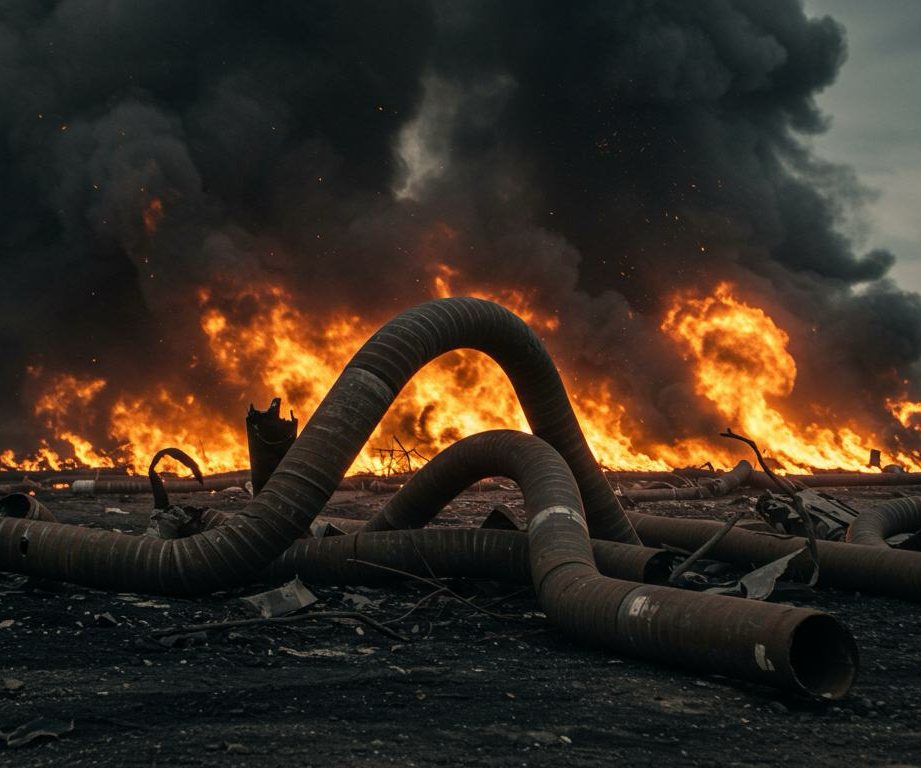
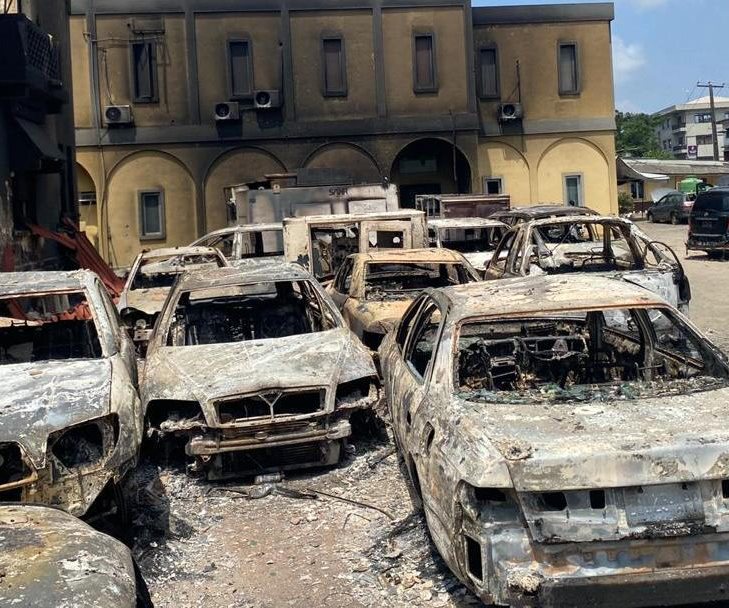
A large mechanised rice mill in Kebbi State suffered a fire in its paddy drying hall during the third quarter of 2024. The claim submitted ran to the full declared value of the drying line together with a substantial allowance for consequential loss. Technical analysis revealed a different picture on both counts.
The ignition mechanism was not the electrical fault the insured had assumed, and the sum insured on the drying plant had been carried forward unrevised for several years while replacement costs moved sharply. Consequently the recoverable amount was reduced by the operation of the Average Clause before any question of scope or betterment was reached.
That second finding is the one worth dwelling on. Fire investigation in an agro-processing risk absorbs all of the available attention, because the mechanism is visible, forensic, and satisfying to establish. The valuation question is quieter and it decides more. In this loss, the difference between what was claimed and what was ultimately payable owed far more to a stale Sum Insured than to any exclusion applied during the adjustment.
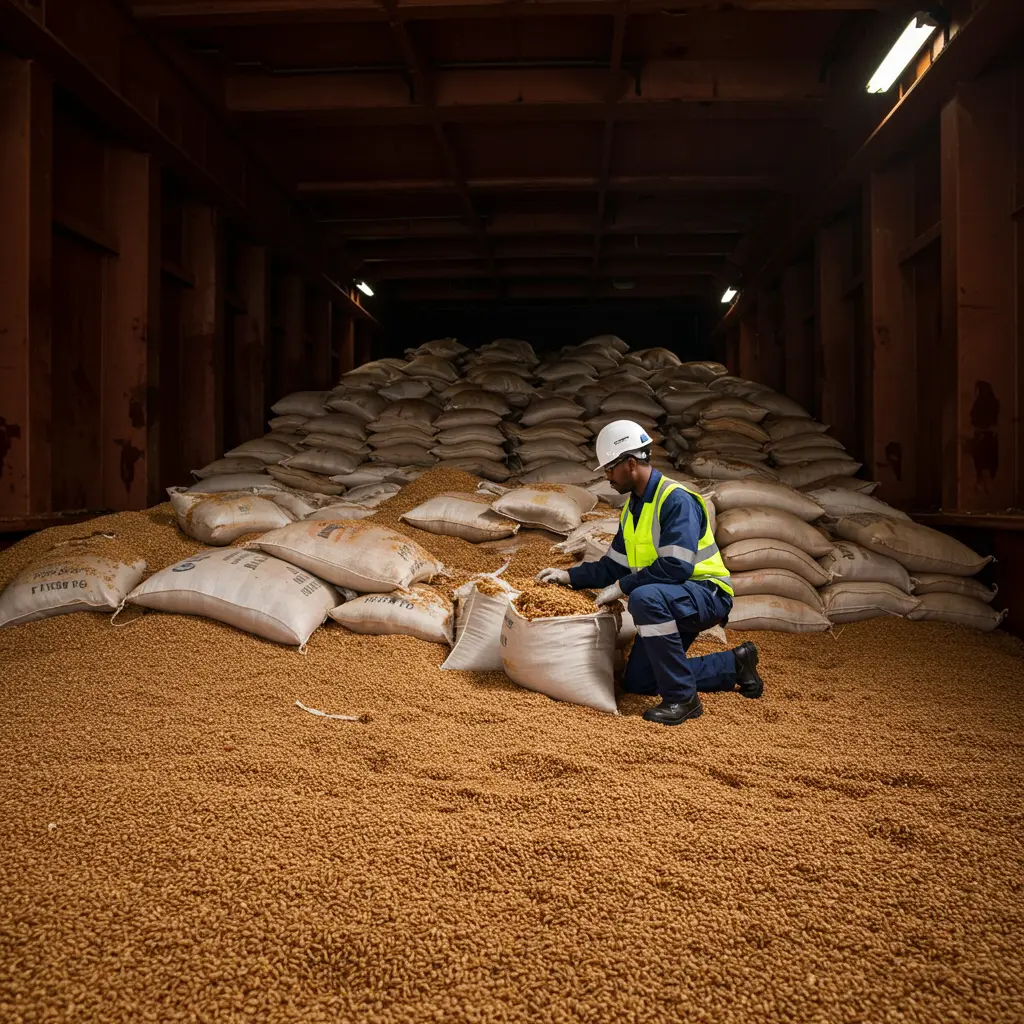
Paddy drying in the north western states is compressed into a narrow window. Rice arrives at the mill at 22 to 24 percent moisture content and must be brought below 14 percent before it can be safely stored, since respiration and mould set in above that threshold.
Mills therefore run their dryers continuously through the weeks following intake, often at the upper end of the throughput the equipment was specified for. Notably, that is also the period in which maintenance is deferred, because taking a dryer offline during the intake peak means turning paddy away at the gate.
How a Grain Dryer Destroys Itself
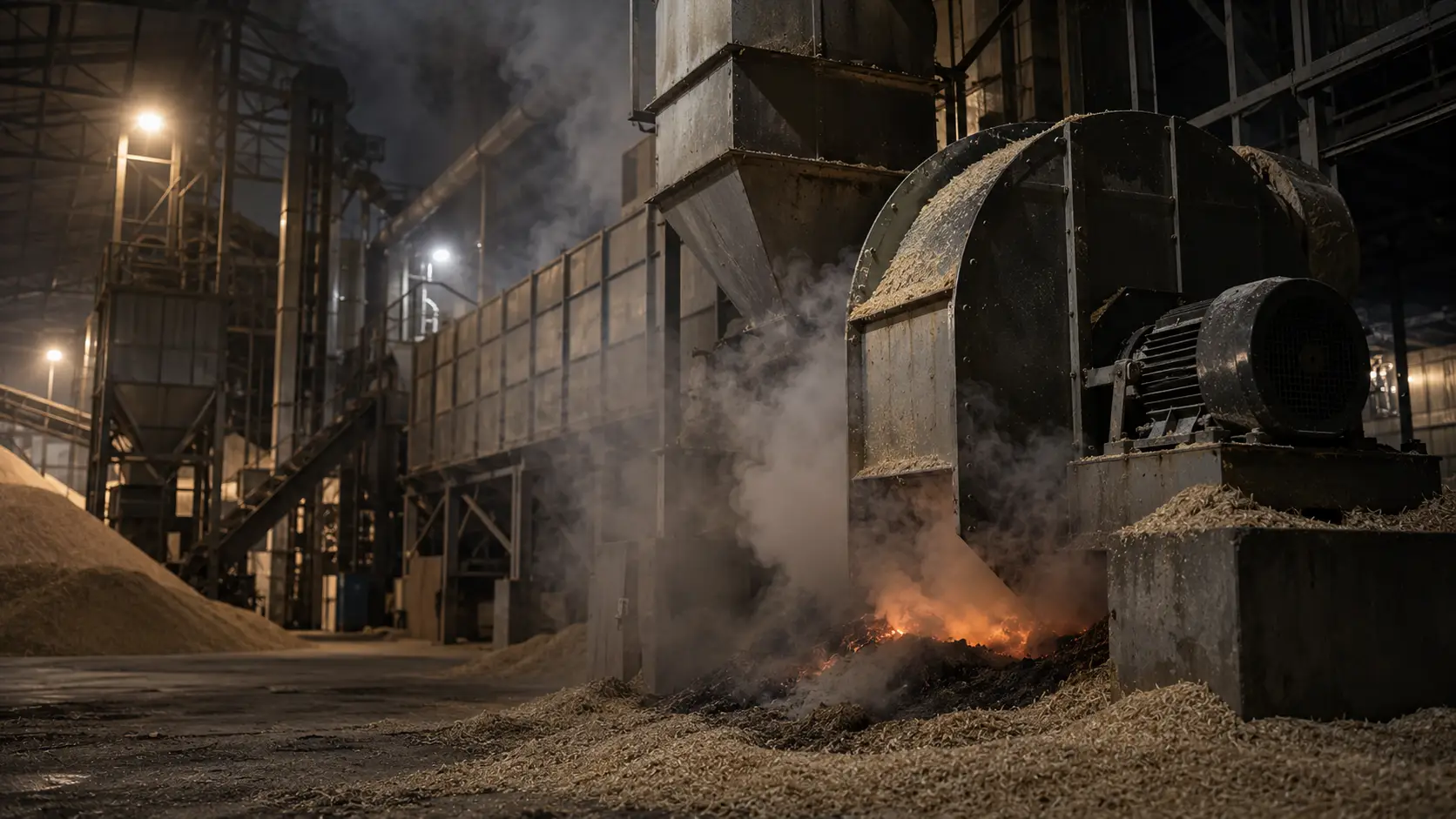
A continuous flow grain dryer works by drawing heated air through a moving column of paddy. The air is warmed in a burner chamber, distributed through a plenum, and pulled across the grain by recirculating fans before being vented. Rice presents a particular hazard within that arrangement because the husk abrades in transit and sheds fines: light, low density particles of husk and bran that the airstream carries into every part of the duct network. Where the air slows, at plenum corners, behind baffles, and around fan housings, those fines settle out as a felt-like deposit.
That deposit is the fuel. Specifically, a settled layer of rice fines has a very low thermal conductivity and a high surface area to volume ratio, which is the combination that permits self-sustaining smouldering combustion. Unlike flaming combustion, smouldering does not require a large ignition energy and does not announce itself with visible flame.
A layer of this kind will accept heat from a modest source, oxidise slowly within its own thickness, and propagate outward at between two and five centimetres per hour. The useful analogy is a cigarette, which burns without flame, sustains itself on its own oxidation, and can travel a long way from the point at which it was lit.
In this loss the modest heat source was a failed bearing on a recirculating fan shaft. Root Cause Analysis of the recovered bearing showed spalling across the outer race and discolouration of the cage, consistent with prolonged operation without adequate lubrication rather than with sudden mechanical failure.
The bearing housing sat directly above an accumulated fines deposit on the plenum floor. The smouldering front established there did not need the burner to be running; it propagated during a scheduled shutdown, which is why the fire was discovered by the night watch rather than by an operator at the control panel.
The distinction matters for Proximate Cause. An electrical fault would have placed the loss squarely within a sudden and accidental event. A progressive bearing failure feeding a smouldering deposit is a chain in which the final link is fortuitous but the earlier links are conditions the insured controlled. Accordingly the investigation had to separate the fire damage, which was covered, from the deteriorated bearing and the fines accumulation, which were not.
The Supply Was Clean and the Bearing Was Not
The insured's initial position attributed the fire to a power surge on the mill's incoming supply. That account was tested rather than accepted. Distribution records obtained from the supplier for the relevant period showed no switching event or voltage excursion in the hours before discovery. In contrast, the mill's own generator logs recorded the plant running on generated power throughout, which removed the incoming supply from consideration altogether.
Physical evidence was assembled from four sources. The recovered fan bearing went to an independent laboratory for metallurgical examination. The manufacturer specified regreasing every 500 operating hours, and the mill's maintenance records showed intervals of more than double that through the intake peak. Burn pattern mapping across the plenum floor established the origin at the fines deposit beneath the fan housing and traced the propagation path upward into the grain column. Finally, intake records established that the dryer had run some 15 percent above its rated hourly throughput across the preceding season.
Three Exclusions Resting on Three Different Clauses
Several heads of claim were disallowed, and the grounds differed in kind. Replacement of the fan assembly and its bearings was excluded as routine maintenance, because the component had reached the end of its service life through deferred lubrication; the fire did not cause that condition, it resulted from it. Cleaning the duct network of accumulated fines was likewise excluded, on the ground that the accumulation was a housekeeping deficiency present before the loss.
Alternatively, where the insured proposed replacing the original burner controls with a modern modulating unit carrying an automatic fines purge, that upgrade was treated as betterment and the allowance limited to like for like reinstatement.
The distinction between those three grounds is not academic. An exclusion for routine maintenance says the insured would have borne the cost regardless of the fire. An exclusion for pre-existing wear says the item was already partly consumed when the loss occurred. A betterment adjustment says the insured is entitled to be restored, not improved. Each rests on a different clause and each survives a different challenge, so recording them as a single undifferentiated deduction weakens the adjustment if the settlement is later disputed.
Where the Sum Insured Failed
Average Reduces Every Item, Not Just the Shortfall
The declared value on the drying plant had been set when the line was installed and carried forward at each renewal without revaluation. Over the intervening years the landed cost of imported drying equipment rose substantially, driven by exchange rate movement and by freight.
Specifically, the reinstatement cost established during adjustment exceeded the Sum Insured by a wide margin, and the shortfall was large enough that Average applied across the whole of that section of the policy rather than to the damaged plant alone.
The effect is worth stating plainly, because insureds routinely underestimate it. Average reduces every payable item in proportion to the ratio between the Sum Insured and the true value at risk, so a partial loss on an underinsured item is cut by the same proportion as a total loss would be.
The insured here had assumed that a claim falling well below the Sum Insured would be met in full. Consequently the settlement was substantially below the amount initially claimed, and underinsurance was the single largest factor affecting the outcome, larger in effect than every exclusion combined.
The Basis of Settlement wording compounded the problem. That section was written on a reinstatement basis, which measures adequacy against current replacement cost rather than against depreciated book value. The mill's declared figure had been drawn from its fixed asset register, where the plant sat at written down cost. Notably, no one in the chain, neither the broker at renewal nor the insured's finance function, had reconciled the two.
What Claims Managers and Underwriters Must Change
The findings below are directed at the two roles with the ability to act on them before the next intake season opens.
For Claims Managers
- Treat an attribution to a power surge as a hypothesis to be tested against supply records and generator logs, not as a starting point. In agro-processing risks the insured's first account is frequently drawn from the most visible candidate rather than from the most probable one.
- Record maintenance exclusions, pre-existing wear exclusions, and betterment adjustments separately, and cite the clause supporting each. A consolidated deduction is considerably harder to defend when a settlement is challenged.
For Underwriters
- Ask what the declared value was derived from. A figure lifted from a fixed asset register will not support a reinstatement Basis of Settlement, and the gap between the two widens every year it goes unreviewed.
- Expect this exposure to grow rather than stabilise. Milling capacity across the northern states is expanding faster than the revaluation habits of the businesses installing it, and continued exchange rate pressure on imported plant means a Sum Insured set three seasons ago is already inadequate today. In contrast to the fire risk, which is well understood and controllable through housekeeping, the valuation gap widens structurally and will not correct itself without intervention at renewal.
The Cheap Fix Is Done and the Expensive One Is Not
The fire in this mill was preventable by ordinary means. A lubrication schedule kept through the intake peak and a fines purge built into the shutdown routine would in all probability have prevented it, and that is the finding the insured has acted on since. The finding that has not been acted on, across the sector rather than at this one site, is the valuation one, and it is by some distance the more expensive of the two.
The drying window will open again after the coming harvest. Most of the plants running through it will be insured on figures set before the last several years of cost movement, and the adjustment following any loss in that window will look a great deal like this one. The conversation about why will happen after the fire rather than before it, which is the only part of this loss that was avoidable at no cost at all.